
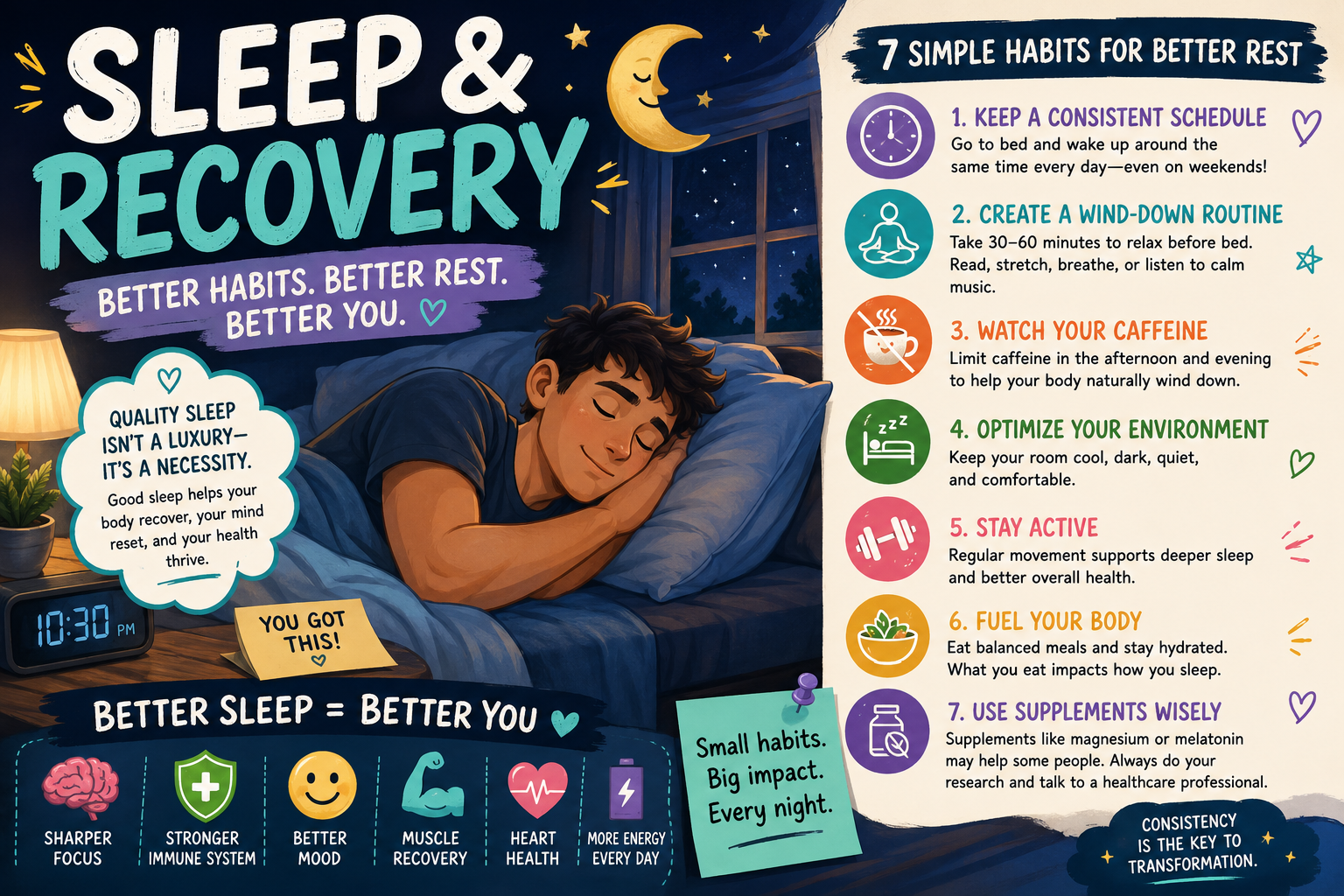
Sleep and Recovery: 7 Simple Habits for Better Rest
During sleep, the body carries out processes involved in physical recovery, memory, learning, immune function, and numerous other aspects of health. There isn't one trick or supplement that guarantees perfect sleep. Instead, consistently practicing a few basic habits can help create an environment that supports healthy sleep.
Sleep is one of the foundations of overall wellness, yet it's easy to treat it as something that can be sacrificed whenever life gets busy.
During sleep, the body carries out processes involved in physical recovery, memory, learning, immune function, and numerous other aspects of health.
There isn't one trick or supplement that guarantees perfect sleep. Instead, consistently practicing a few basic habits can help create an environment that supports healthy sleep.
Here are seven places to start.
1. Keep a Consistent Sleep Schedule
One of the simplest ways to support sleep is to keep your bedtime and wake time relatively consistent.
Your body has an internal biological clock known as the circadian rhythm, which helps regulate periods of sleepiness and alertness throughout the day.
Constantly changing when you sleep can make it more difficult to establish a predictable rhythm.
Try to wake up and go to bed around similar times each day, including weekends when practical.
You don't need to follow your schedule perfectly. Consistency over time matters more than making every night identical.
2. Create a Wind-Down Routine
Going directly from a busy day to trying to sleep can be difficult.
A short routine before bed can create a transition between daytime activities and sleep.
Your routine could include:
Reading
Taking a shower
Preparing for the next morning
Gentle stretching
Listening to relaxing music
Dimming the lights
The specific activity isn't as important as finding something relaxing that you can consistently repeat.
3. Pay Attention to Caffeine
Caffeine can increase alertness, which is exactly why many people use it.
The downside is that caffeine consumed later in the day can interfere with sleep for some people.
Coffee isn't the only source. Energy drinks, tea, pre-workout supplements, soft drinks, chocolate, and certain medications or supplements can also contain caffeine.
If you have trouble falling asleep, consider looking at how much caffeine you're consuming and when you're consuming it.
People respond to caffeine differently, so your ideal cutoff time may differ from someone else's.
4. Make Your Bedroom Sleep-Friendly
Your environment can have a significant effect on how comfortable it is to sleep.
A bedroom that is dark, quiet, comfortable, and appropriately cool can help create conditions that support rest.
Consider things such as outside light, electronic devices, room temperature, noise, and the comfort of your mattress and pillows.
You don't need an elaborate sleep setup. Addressing one obvious source of discomfort or distraction may make a noticeable difference.
5. Get Regular Physical Activity
Regular physical activity is an important component of overall health and can also support healthy sleep.
This doesn't mean you need an intense workout every day.
Walking, resistance training, cycling, sports, and other forms of movement can all contribute to an active lifestyle.
The key is finding physical activity that is appropriate for you and sustainable enough to do regularly.
For some people, intense exercise immediately before bedtime may make it harder to settle down. If that's the case for you, try moving demanding workouts earlier in the day.
6. Don't Ignore Nutrition and Hydration
Sleep and nutrition aren't separate parts of health.
Your body needs adequate energy, protein, vitamins, minerals, fluids, and other nutrients to function normally and recover.
Rather than searching for one food that supposedly improves sleep, focus on your overall eating pattern.
A balanced diet built around nutrient-dense foods can include vegetables, fruits, whole grains, protein sources, healthy fats, and other foods that fit your nutritional needs.
Hydration matters too, but drinking large amounts of fluid immediately before bed may result in waking up during the night to use the bathroom.
7. Treat Supplements as Supplements
The growing interest in sleep has led to an enormous market for nighttime supplements.
You'll see products containing ingredients such as melatonin, magnesium, herbal extracts, and combinations of several ingredients.
A supplement shouldn't be the first or only strategy for improving sleep.
Start with the basics: your schedule, environment, caffeine intake, physical activity, diet, and nighttime routine.
If you're considering a sleep supplement, research the ingredients rather than relying solely on claims made on the front of the package.
An ingredient being available without a prescription doesn't automatically mean it's appropriate for every person. Supplements may cause side effects or interact with medications and other products.
A healthcare professional can help you determine whether a particular supplement makes sense for your situation.
How Much Sleep Do You Need?
Sleep needs aren't identical for everyone and can vary with age and individual circumstances.
For adults, getting enough sleep involves more than simply spending a certain number of hours in bed. Sleep quality, consistency, and how you function during the day also matter.
If you consistently have trouble falling asleep, staying asleep, or feeling rested despite allowing enough time for sleep, it may be worth discussing the issue with a healthcare professional.
Persistent sleep problems can have many causes, and adding another supplement isn't necessarily the solution.
Build the Basics First
It's easy to make sleep complicated.
Specialized mattresses, wearable trackers, supplements, apps, and other products can be useful in some circumstances, but they don't replace the fundamentals.
Start with a consistent schedule. Create a comfortable environment. Stay active. Pay attention to caffeine. Eat a balanced diet. Give yourself time to wind down.
You don't need to change everything tonight.
Choose one habit that could realistically improve your routine and practice it consistently. Once it becomes normal, you can work on another.
The Bottom Line
Sleep is an important part of physical recovery and overall wellness.
While supplements and specialized products have their place, healthy sleep usually starts with everyday habits.
Building a consistent sleep schedule, creating a relaxing nighttime routine, staying physically active, supporting your nutritional needs, and improving your sleep environment can create a strong foundation for better rest.
Small improvements repeated consistently can be more practical than searching for a perfect nighttime routine.
Medical Disclaimer: This article is for general educational and informational purposes only and is not medical advice. It is not intended to diagnose, treat, cure, or prevent any disease. If you experience persistent sleep problems or have questions about supplements, medications, or your health, consult a qualified healthcare professional.