
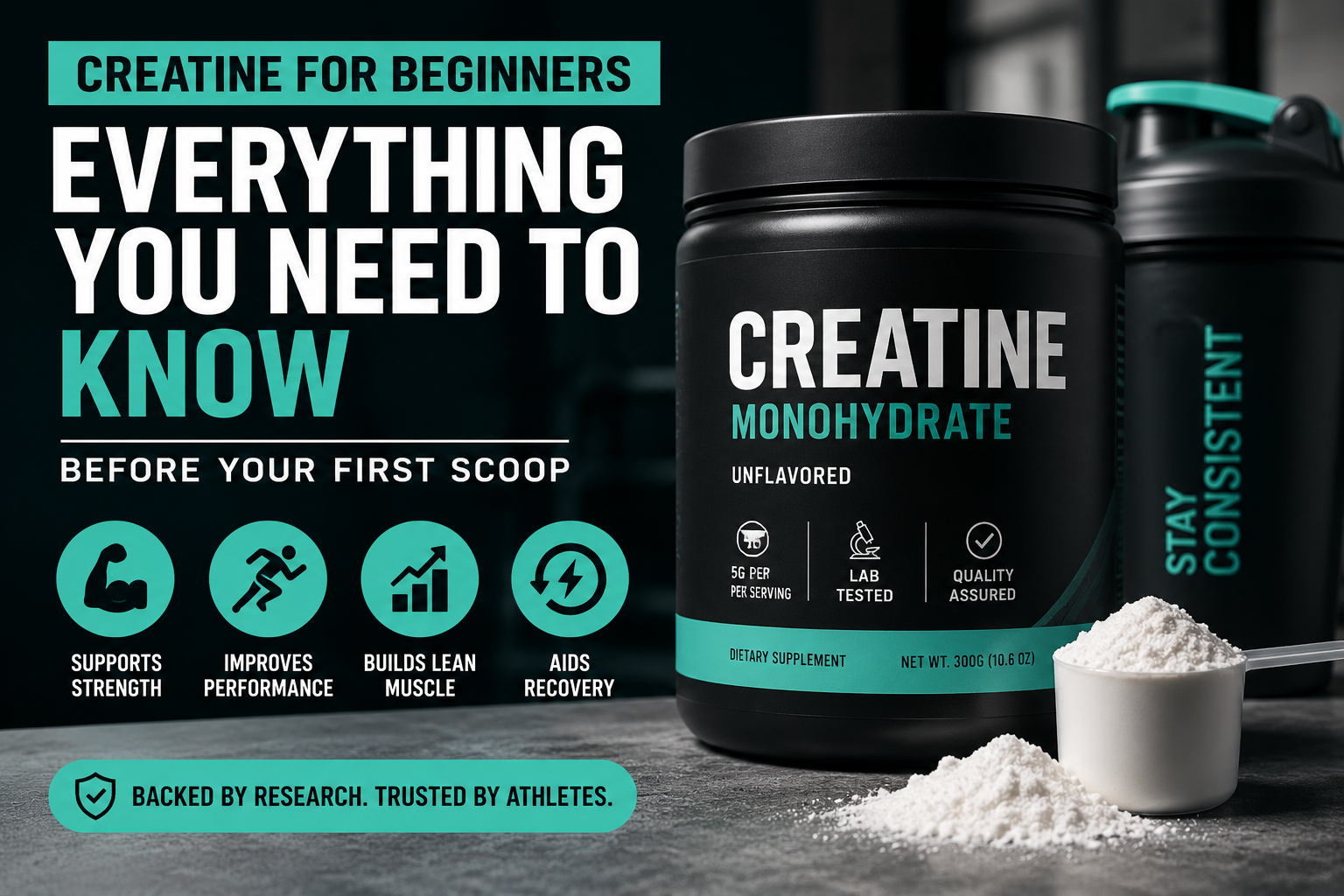
Creatine for Beginners: Everything You Need to Know Before Your First Scoop
It's one of the most popular supplements in the fitness world—but with so much information online, it can be difficult to separate facts from myths.
Creatine for Beginners: Everything You Need to Know Before Your First Scoop
If you've recently started working out, chances are you've heard someone mention creatine. It's one of the most popular supplements in the fitness world—but with so much information online, it can be difficult to separate facts from myths.
The good news is that creatine is also one of the most extensively researched sports supplements available. Here's what every beginner should know before deciding whether it's right for you.
What Is Creatine?
Creatine is a naturally occurring compound found in your muscles and brain. Your body produces it from amino acids, and you also get small amounts from foods like red meat and fish.
Its main job is to help your muscles quickly produce energy during short, high-intensity activities such as weightlifting, sprinting, or jumping.
Although your body makes creatine on its own, supplementing with creatine can increase your muscle stores, allowing your body to perform repeated high-intensity efforts more effectively.
How Does Creatine Work?
Your muscles use a molecule called ATP (adenosine triphosphate) as their primary energy source.
During intense exercise, ATP is used up within seconds.
Creatine helps regenerate ATP more quickly, allowing you to maintain performance during repeated sets or bursts of exercise.
This is why creatine is especially popular among people who:
Lift weights
Play sports involving explosive movements
Perform high-intensity interval training (HIIT)
What Are the Benefits?
Research suggests that creatine supplementation may help:
Support improvements in strength when combined with resistance training.
Improve performance during repeated high-intensity exercise.
Increase lean muscle gains over time as part of a consistent training program.
Speed up recovery between intense sets for some individuals.
It's important to remember that creatine is not a substitute for proper nutrition, training, or adequate sleep.
Which Type Should You Buy?
There are many forms of creatine available, including:
Creatine Hydrochloride (HCl)
Buffered Creatine
Creatine Ethyl Ester
Creatine Nitrate
Creatine Monohydrate
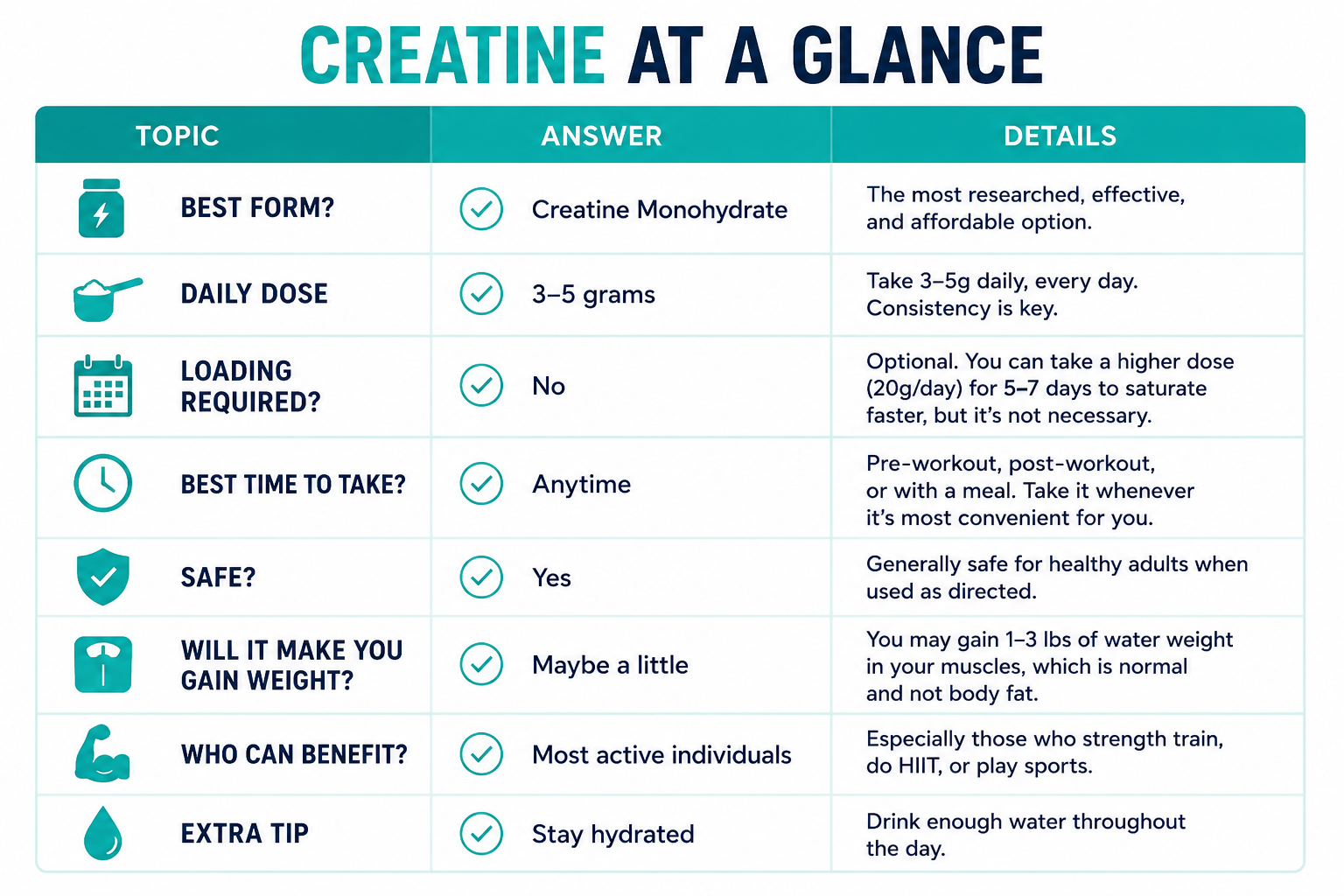
Despite the marketing claims surrounding newer forms, creatine monohydrate remains the most studied and widely recommended option for most people.
It has consistently demonstrated effectiveness, is affordable, and has been researched extensively.
Do You Need a Loading Phase?
Not necessarily.
Some people choose to load creatine by taking around 20 grams per day (split into four servings) for 5–7 days before switching to a maintenance dose.
However, loading is optional.
Most beginners can simply take 3–5 grams of creatine monohydrate daily. Your muscles will still become saturated—it just takes a few weeks longer.
When Should You Take Creatine?
The exact timing isn't nearly as important as consistency.
Whether you take it:
Before your workout
After your workout
With breakfast
In the evening
The most important factor is taking it every day.
Many people find it easiest to take creatine with a meal or after training simply because it's easier to remember.
Is Creatine Safe?
For healthy adults, creatine monohydrate has been studied extensively and is generally considered safe when used as directed.
Some people may notice:
Mild stomach discomfort if taking too much at once.
A small increase in body weight due to water being stored inside muscle cells.
If you have kidney disease, another significant medical condition, or take medications that may affect kidney function, it's best to speak with your healthcare provider before starting creatine or any new supplement.
Common Myths
"Creatine is a steroid."
False.
Creatine is not an anabolic steroid and works through a completely different mechanism.
"Creatine damages your kidneys."
Current research has not shown creatine monohydrate to harm kidney function in healthy individuals when taken at recommended doses. People with existing kidney disease should consult a healthcare professional before using it.
"You have to cycle creatine."
There is no strong evidence that healthy individuals need to cycle on and off creatine.
Who Should Consider Creatine?
Creatine may be worth considering if you:
Regularly strength train.
Participate in explosive sports.
Want to improve training performance.
Are looking to support long-term muscle and strength gains alongside a structured exercise program.
It may be less beneficial for people who rarely perform high-intensity exercise.
Final Thoughts
Creatine has earned its reputation because it's supported by decades of research. While it isn't a magic solution, it can be a useful addition to a balanced diet and consistent training program.
If you're new to supplements, creatine monohydrate is often the simplest place to start thanks to its strong evidence, affordability, and proven track record.
As with any supplement, choose products from reputable manufacturers, follow the recommended serving size, and speak with a healthcare professional if you have any questions about whether creatine is appropriate for your individual health needs.